
WEB DESIGN IN THE ENERGY CAPITAL
Oil and Gas Website Design for Energy Companies
Websites for operators, oilfield service companies, midstream firms, equipment suppliers and energy consultants that win technical buyers, pass procurement reviews and recruit field crews, designed and built in-house in Houston.
Galleria 713-703-3030 | Kingwood 281-852-8253
BUILT FOR ENERGY
How do energy buyers judge a vendor online?
In oil and gas, the first conversation usually happens without you. A procurement manager, a drilling engineer or a project lead reviews your website before deciding whether you make the bid list. They want to know what you do, where you operate, what equipment and certifications you bring and whether your safety program holds up.
If the site cannot answer those questions quickly, the call goes to a competitor. A dated site also raises a quieter question: if the website has not been updated since the last downturn, what else has not?
We build energy sites on WordPress, hosted on our own servers and planned with our SEO services team so the right buyers find them.
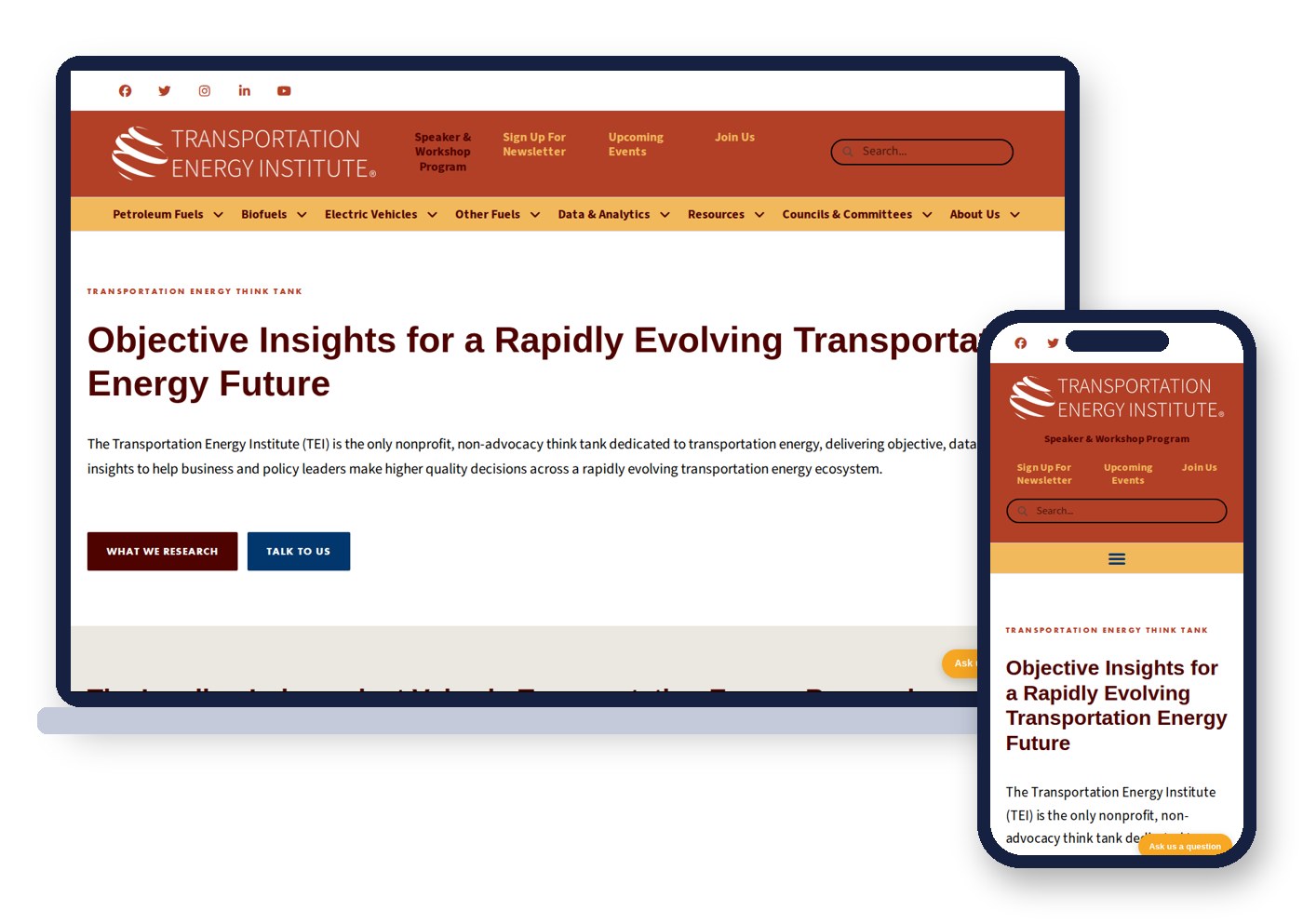
WHAT BUYERS CHECK
What procurement and engineering teams look for
Services in detail
A page for each service line or product, with specs, capacities and the problems you solve.
Where you work
Basins, regions and yards, such as the Permian, Eagle Ford, Haynesville, Gulf Coast or offshore.
Safety first
Your safety program, training, certifications and the metrics your safety team approves.
Equipment and fleet
What you own and operate, with capacities buyers can match to their job.
Prequalification
Memberships in prequalification networks, insurance and quality systems, ready for vendor onboarding.
A direct bid path
Request a quote or bid on every service page, routed to the right estimator or district manager.
PAGES THAT RANK
What pages should an oil and gas website have?
Energy buyers search specifically. They type the service, the equipment and the region together, such as “hydrostatic testing Pasadena” or “frac tank rental Midland.” A single services page cannot rank for any of those. The structure we build:
- Service line pages for each core offering, written with the technical detail engineers expect.
- Region and yard pages for each basin or district you work from, with local contacts and capabilities.
- Industry pages if you also serve petrochemical, refining, power, renewables or industrial markets.
- Safety and quality pages that a procurement team can point to during vendor review.
- Project pages that describe the scope, the conditions and the result, within what clients allow you to share.
- Careers pages for each job family, from CDL drivers to field engineers.
Location matters more than people think, even in a global industry. Beth Guide points out in her local SEO classes that The Woodlands has become a home for many large energy corporations, while downtown has grown more diverse. A supplier that serves corporate buyers in The Woodlands and field operations in West Texas needs pages that speak to both. Our local SEO work builds those location signals.
RECRUITING
How can an energy website help you hire field crews?
Energy companies face a recruiting challenge most industries do not. Field crews, technicians and engineers check your website before they apply, usually from a phone at a job site or in a truck between shifts. A careers page that is a single paragraph and an email address loses those candidates to the company down the road.
The careers sections we build include:
- Job pages that use the titles candidates search, such as CDL Class A driver, wireline operator or HSE coordinator.
- Short applications that work on a phone, with resume upload optional for field roles.
- Real photos and video of your crews, yards and equipment.
- Clear details on rotations, locations, training and benefits, as far as you are comfortable sharing.
- Job schema so openings can appear in Google’s job listings.
Short crew videos do more for recruiting than any stock photo. Our video marketing team can produce them, and social media campaigns put open roles in front of experienced hands.
THE CASE FOR VERTICAL WEB ON OIL AND GAS WEBSITES
A Houston web team through every cycle since 1998
We teach this
Beth Guide teaches digital marketing for the SBA, the University of Houston SBDC, Lone Star College and HCC, and appears as a technology expert on Fox 26.
One in-house team, no offshore
Design, development and hosting by our own Houston staff. Your project files and vendor data stay with people you can meet.
Staying power
We have built websites through every oil price cycle since 1998, and our original 1998 client is still with us.
THROUGH THE CYCLE
How should an oil and gas website handle booms and downturns?
Anyone who has worked in Houston knows this industry runs in cycles. Websites tend to get built in a boom and ignored in a bust, which is exactly backward.
In a downturn, operators cut vendor lists and research more carefully. The suppliers that stay on the short list are the ones whose websites make capability, safety and cost control easy to verify. A downturn is also when diversification pays: pages for petrochemical, power generation, renewables, hydrogen, carbon capture or general industrial work can bring in revenue from adjacent markets without changing what you do.
In a boom, the problem flips. Leads are plentiful and hands are scarce, so the careers section does the heavy lifting.
Content keeps you visible through both. Short technical articles that answer engineers’ questions, published steadily, build authority with buyers, search engines and AI engines alike. Beth’s advice for energy companies is to write for the engineer, the way the industry trade magazines do, not for a general audience. Our content marketing team writes that way, and our AI SEO services help make sure AI assistants cite you when buyers ask them for suppliers.
WHO WE DESIGN FOR
Energy websites we build
Oilfield service companies
Drilling, completions, wireline, fluids, water transfer, inspection and testing.
Midstream and pipeline
Gathering, transportation, storage, compression and pipeline construction and integrity.
Equipment and manufacturing
Valves, pumps, compressors, wellhead equipment, fabrication and rental fleets.
Many energy suppliers are manufacturers or distributors at heart. If that describes you, see our manufacturing website design and heavy equipment website design pages for RFQ forms, capability pages and inventory listings.
VENDOR ONBOARDING
Make it easy for procurement to say yes
Getting on an approved vendor list takes paperwork: insurance certificates, W-9s, safety manuals, quality certifications, MSA templates and prequalification network IDs. Procurement teams spend hours chasing those documents, and the vendor who makes it easy has an edge before price comes up.
We build a simple vendor resources page for energy clients. It lists your prequalification memberships, explains how to request your insurance certificate and safety documentation and gives buyers one contact for onboarding questions. Sensitive documents stay behind a request form, so you know who is asking and nothing confidential sits on a public page.
The same thinking applies to existing customers. Field tickets, service reports and equipment manuals can be delivered through a secure client area instead of email attachments that get lost. Small conveniences like these are rarely what wins the first job, but they are often what wins the second and third.
Template or custom build
Oil and gas web development: website templates vs a custom site, and the maintenance after launch
An oil website template can look the part, with a drilling rig in the hero image and a dark color scheme. The difference shows up when a buyer tries to use it. Templates are built for a generic business, so they rarely have room for service line pages, basin pages, equipment specs, safety documents and a careers section with job schema. Your team ends up forcing an industrial company into a layout made for a restaurant.
A custom WordPress site is planned around how your buyers and candidates move through it. Each division or service line gets its own landing page, with images that show real equipment and crews instead of filling space. Responsive design keeps the specs, the phone number and the bid form easy to use on a device in the field. The visitor finds the relevant capability without reading the company history first.
Maintenance matters as much as the build. Energy companies change fast: new yards, new divisions, new safety numbers, an acquisition or a rebrand. We host the site on our own servers, handle updates and backups, and make changes when your business does, so the website never falls behind the company. The same approach runs through our manufacturing website design and heavy equipment website design work, which many energy suppliers also need.
QUESTIONS
Oil and gas website design questions
Clear service or product pages, the basins and regions you operate in, equipment and fleet details, safety programs and the metrics you are willing to publish, certifications and prequalification memberships, project examples, a careers section built for field hires and a direct way to request a bid or a quote.
By ranking for the specific services and regions buyers search, such as frac water transfer in the Permian or valve repair in Pasadena, and by giving procurement teams everything they need to add you to a bid list. Most energy leads start with an engineer or buyer quietly reviewing your site before they call.
Usually, yes, in the way your company is comfortable sharing it. Buyers check safety before they check price. Many companies show their safety program, training, certifications and memberships in prequalification networks, and some publish TRIR or EMR figures. Only publish numbers your safety team has approved.
With a careers section designed for phones, short applications, real photos of crews and job sites, clear pay and rotation details where you can share them and job pages that use the titles candidates search. In a tight labor market, your website competes for hands as hard as it competes for contracts.
Yes. When budgets tighten, buyers consolidate vendors and research more carefully. A site that shows capability, safety and cost control keeps you on the short list, and content that targets adjacent markets, such as renewables, petrochemical or industrial work, can open new revenue.
Yes. We build for operators, oilfield service companies, midstream and pipeline firms, refining and petrochemical suppliers, equipment manufacturers and rental companies, energy consultants and energy research organizations.
A template is fast, but it is built for any business. Most energy companies need service line, basin, equipment, safety and careers pages that a template does not plan for, so a custom WordPress site usually serves buyers and recruiting better.
Yes. We host the site, handle updates, backups and security, and update pages when you add yards, divisions, services or certifications.
Is your website getting you on the bid list?
Request a free website audit. We will review your service and region pages, safety and prequalification content, careers section and speed, then tell you plainly what to fix first.
Galleria 713-703-3030 | Kingwood 281-852-8253 | info@verticalweb.com
No related posts.