
INDUSTRIES WE SERVE
Industries We Serve: Houston Web Design, SEO and AI Search by Industry
A dentist, a machine shop and a nonprofit are not found the same way. Pick your industry below. Each one has its own website design page and its own marketing page, built on work in that market since 1998.
Galleria 713-703-3030 | Kingwood 281-852-8253
Home › Industries We Serve
Since 1998 we have built and ranked websites for just about every kind of small business and professional practice in Houston. Along the way we learned that the industry decides the strategy. A purchasing agent searches by part number. A patient searches for the problem, not the practice. A resident types the whole question. That is why every industry here gets 2 pages: one for the website it needs and one for the marketing that fills it. Behind both sit the same in-house team and the same 3 pillars: Houston web design, Houston SEO and AI search optimization.
Start with your industry. If you do not see it, go to the local business card or request a free website audit and we will tell you which pages your market needs.
ENERGY, INDUSTRIAL AND DISTRIBUTION
Energy, manufacturing, equipment and construction
Buyers here search the way they write a drawing: material, grade, process, part number, then a place. The pages have to be findable nationally and still prove a Houston address.

Oil, gas and energy
Service companies, operators and suppliers from the oilfield to the Energy Corridor, built for the procurement search.

Manufacturing
Capability and product pages a buyer at a national company can find, with datasheets and certifications as real page text.
Heavy equipment
Sales, rental and service sites with live inventory pages that rank for the model name.

Dealers and distributors
Line cards where every product line is its own indexable page, and territory pages for the areas you cover.

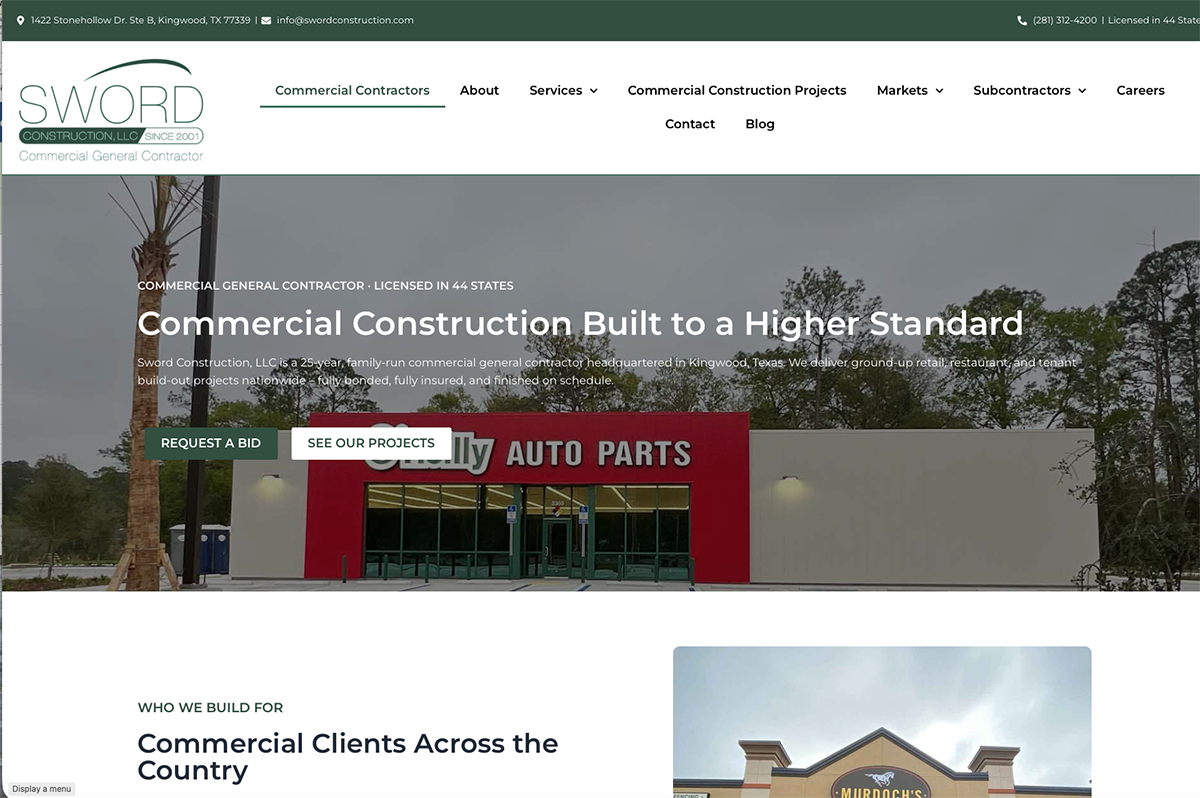
Construction
Commercial and industrial contractors, with project pages that prove the work and win the bid list.

Contractors and home services
HVAC, plumbing, roofing, electrical and remodel companies, with service plus neighborhood pages for the subdivisions you actually work.
MEDICAL, DENTAL, LEGAL AND PROFESSIONAL
Practices and firms people search for by the problem
Nobody types your firm name until they already know you. They search for the problem, check the map pack, read the reviews and then look you up. Compliance rides along on every page.
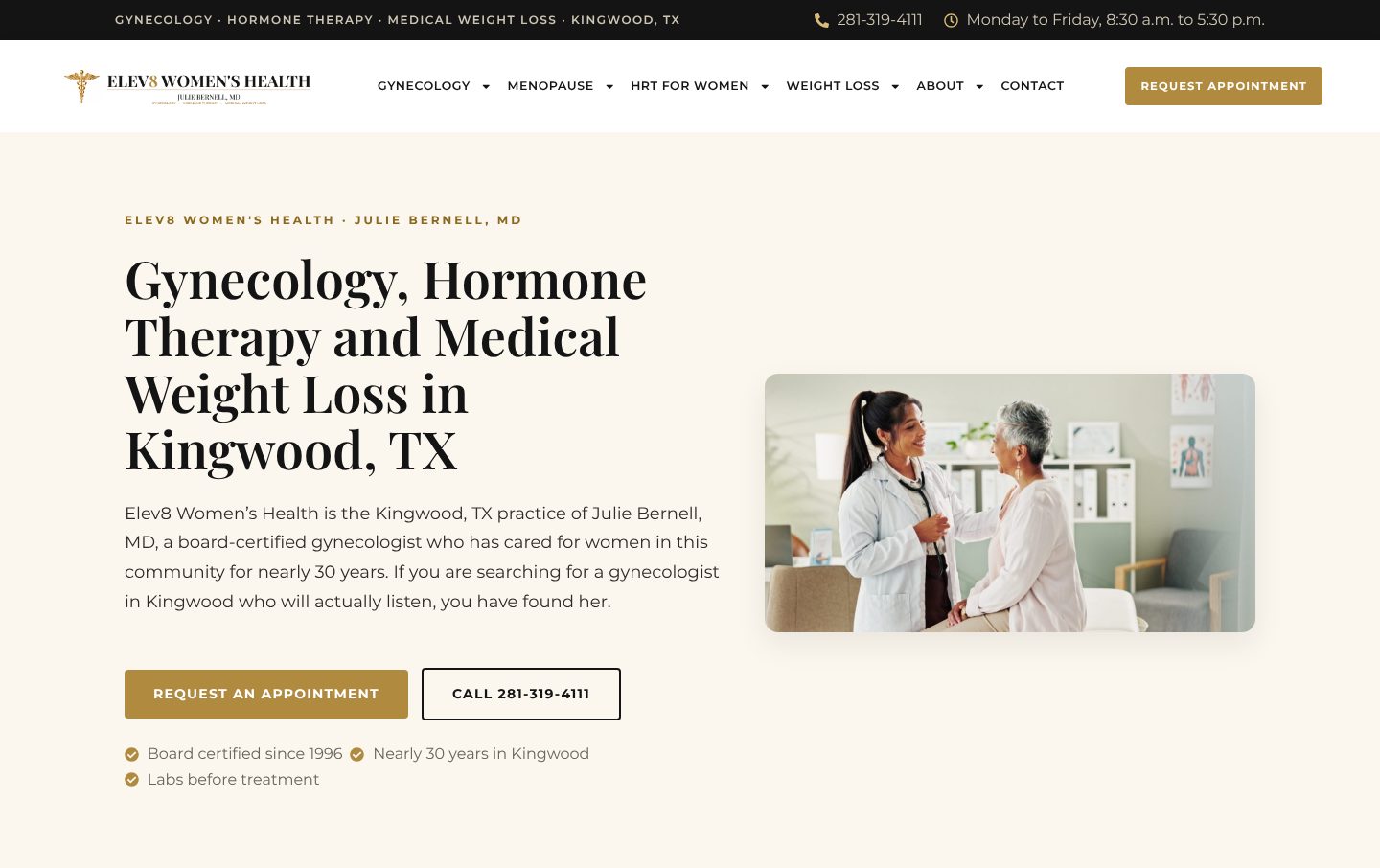
Medical and healthcare
Procedure and condition pages that rank, provider bios with Physician schema, HIPAA-aware forms and live reviews.

Dental
A page for every service patients search, from implants to aligners, in every neighborhood you draw from.
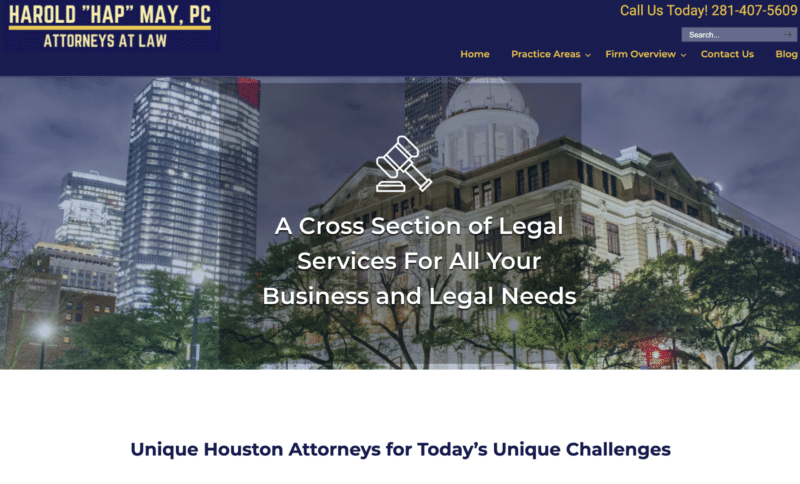
Law firms
A page per practice area and per county, attorney bios with Person schema, and an intake short enough to fill in from the courthouse steps.

Professional services
Accountants, consultants, engineers and architects, built for the referral check and the name search.

Financial services
Advisors, lenders and CPAs, with the compliance review built into the publishing process.

Insurance
Agency sites with a page per line of coverage and the quote form that actually gets filled in.
WHY VERTICAL WEB
Why Houston businesses in every industry choose us
Hire the people other marketers learn from
Beth Guide has taught SEO for the SBA, the University of Houston SBDC, Lone Star College and HCC since 2003, and is the technology expert on Fox 26.
One accountable in-house team
Hosting, design, development, content and SEO under one roof. No vendor pointing at another vendor when a page stops ranking.
Staying power you can check
In business since 1998, Certified Google Partner, 4.9 Google rating, First Place triple honors in Best of West Houston 2025. The original 1998 client is still here.
REAL ESTATE, RETAIL AND CONSUMER
Where the product and the place both have to rank
If Google shows a map, you are in a local race. If there is no map, you are in a national race. Google decided that, not you, and the page has to be built for the race you are in.
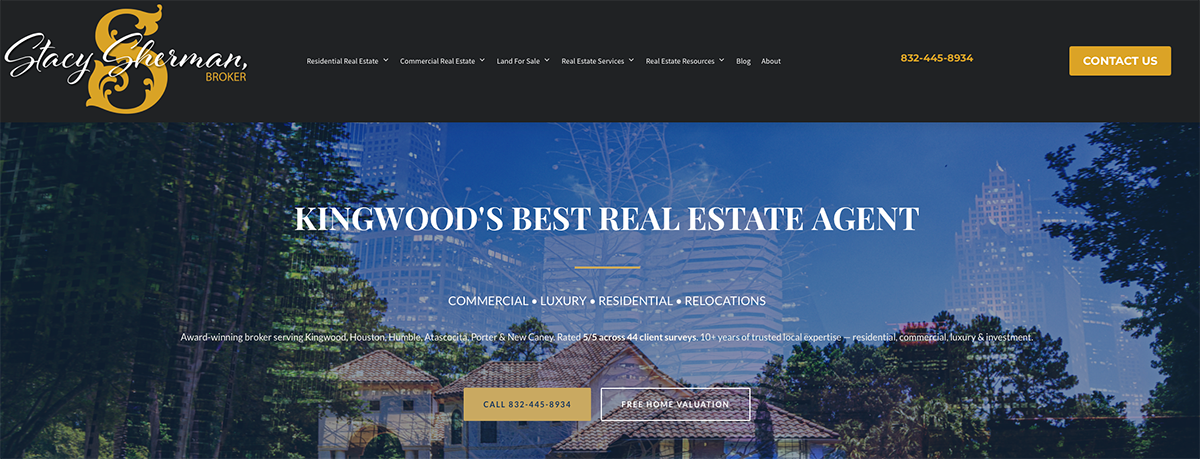
Real estate
IDX sites on your own domain that rank for subdivision names, with agent pages that win the name search. A specialty for years.

Ecommerce and retail
WooCommerce stores that rank for product and category searches, not just the brand name, on PCI compliant hosting.

Restaurants and hospitality
Text menus Google can read, reservations and ordering wired in, and the local signals that fill tables.

Food and beverage brands
Packaged food and drink brands selling to shoppers, retailers and distributors from one website.

Automotive
Parts, detailers, truck customization and repair shops. Not dealerships; everything else automotive.
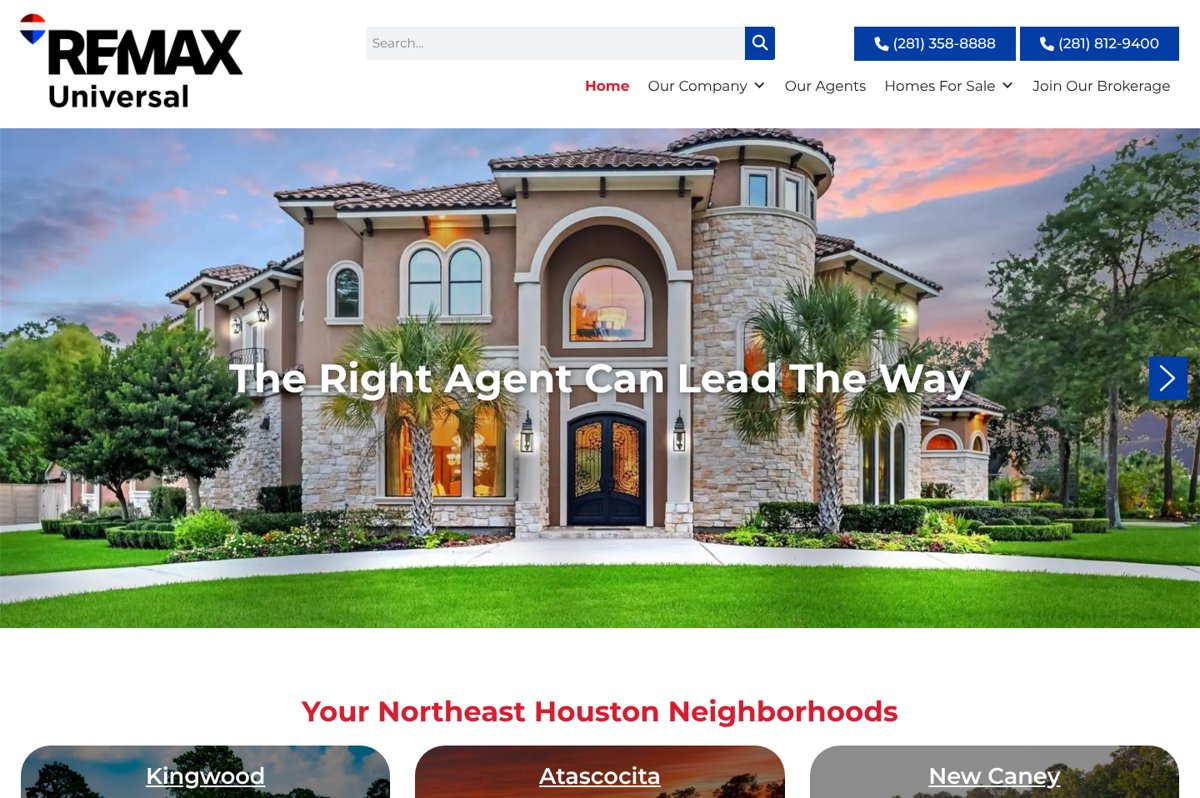
Franchises
Location pages that follow brand rules and still rank locally, with the structure to add the next unit in a day.
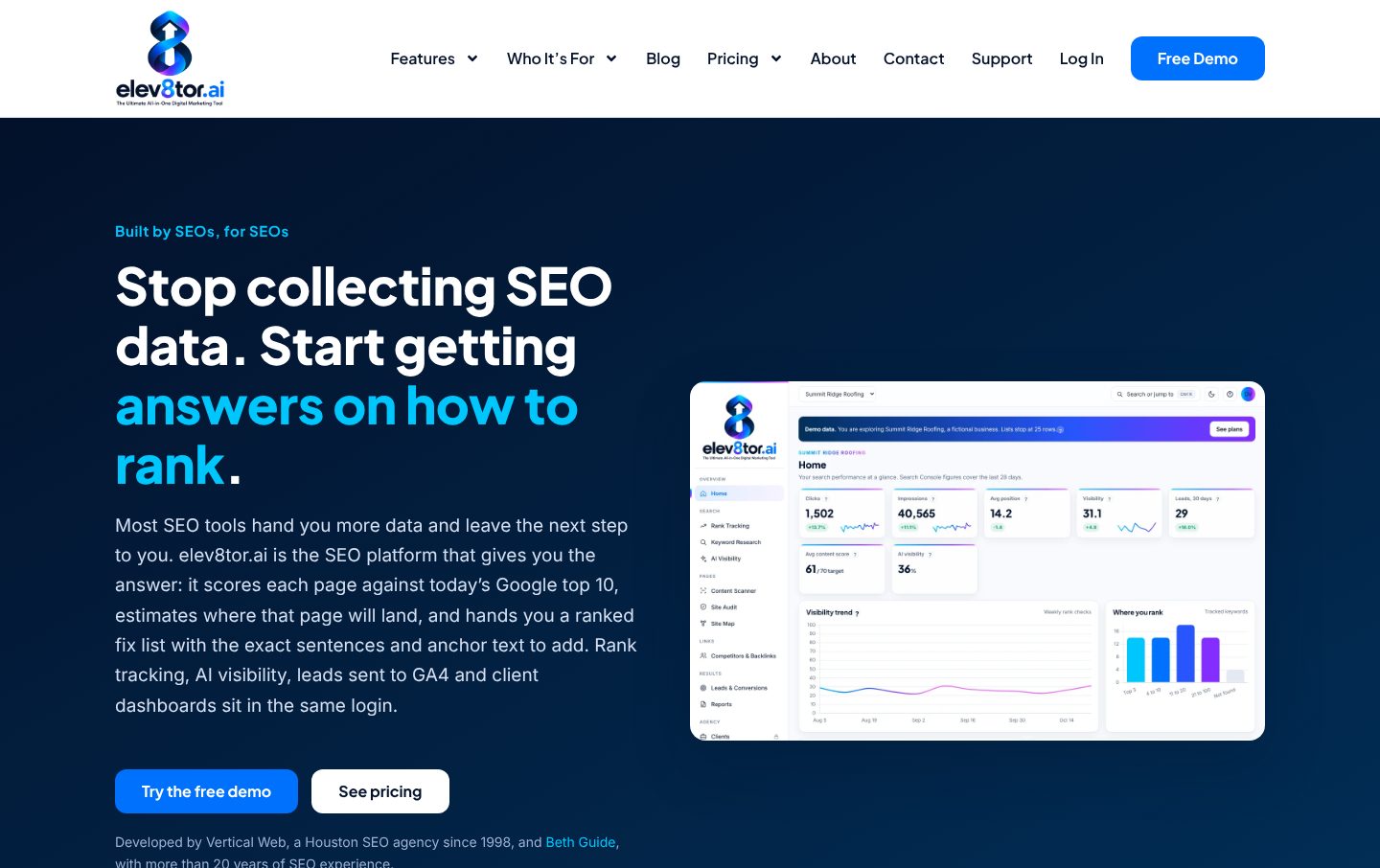
Technology and SaaS
Feature, use-case and comparison pages built for the search that ends in a demo request.
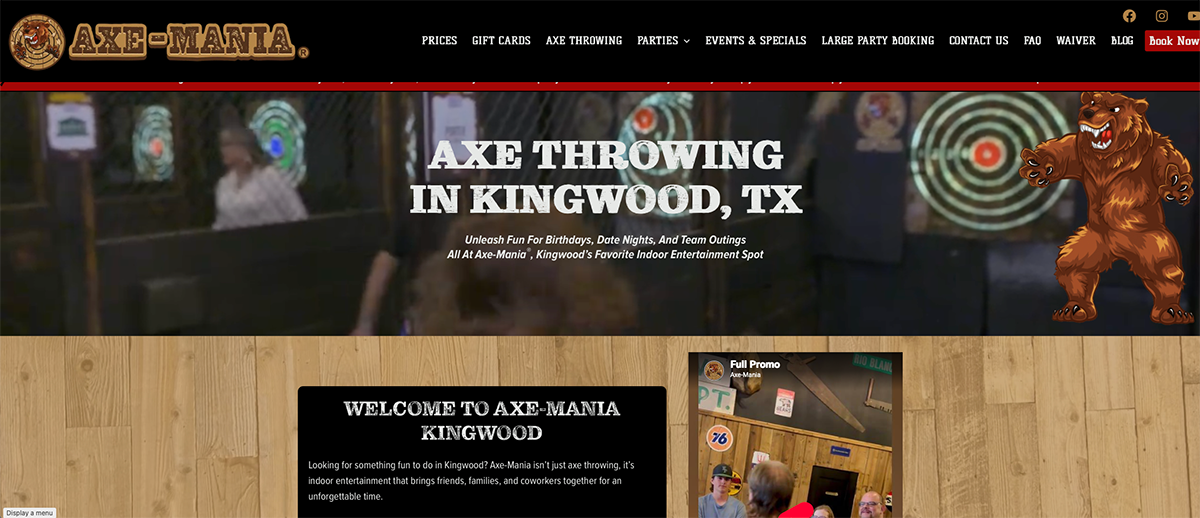
Entertainment and venues
Venues, events, hotels and attractions, with Event schema and booking that Google can read.

Local businesses
Every other Houston business with a front door and a phone, built to be found in its own neighborhood.
NONPROFIT, GOVERNMENT, EDUCATION AND COMMUNITY
Accessible, compliant and still found
Three different people search three different ways: the people you serve search by need, volunteers by time and place, and donors, voters and board members by name, looking for trust before they act. The site has to answer all three.

Nonprofits and churches
Donation and event flows that work on a phone, and the program pages that keep members and funders engaged.

Government and elections
Accessible sites for districts, agencies, elected offices and election offices, with the documents residents actually search for.

Schools and education
Enrollment, calendars and the parent search, built accessible from the start.

Chambers of commerce
Member directories that rank for every member, event calendars, and the join flow.
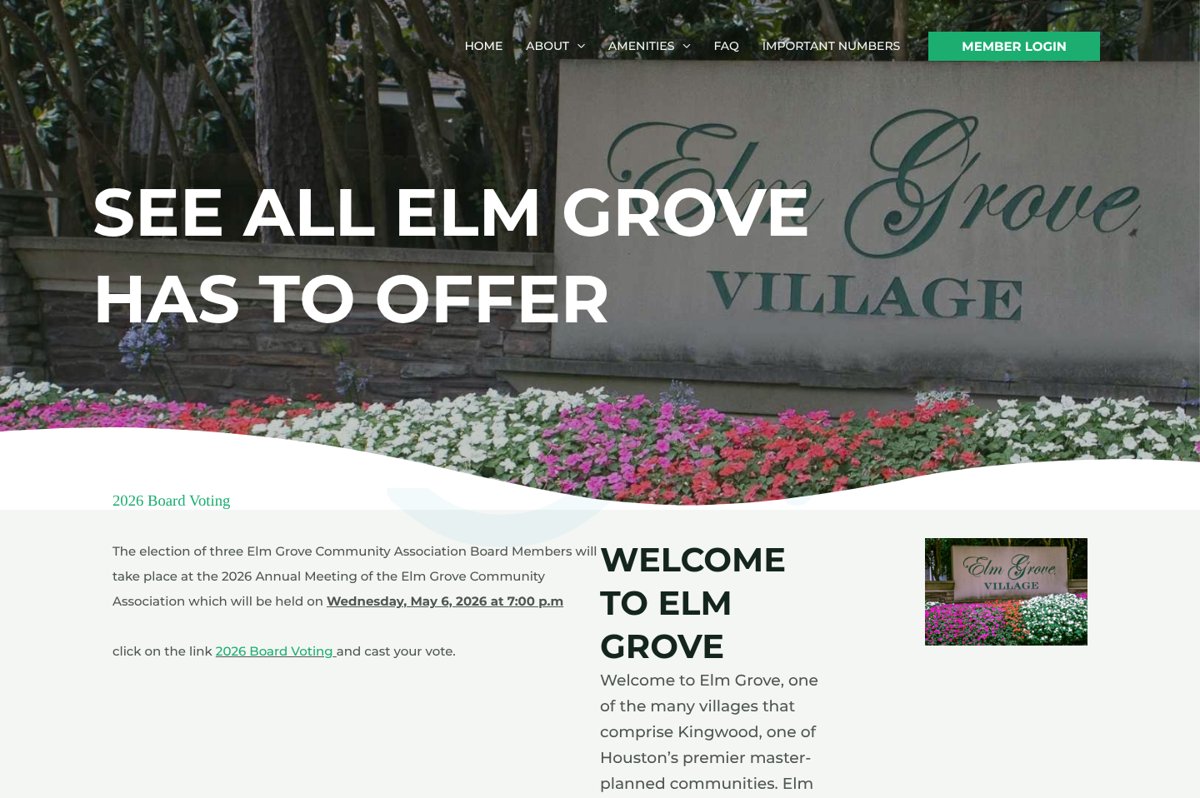
Homeowner associations
Resident portals, public documents and the pages a buyer reads before they close.
Political campaigns
Candidate sites built fast and affordably, with the voter data, texting and advertising behind them.
WHY ONE PAGE PER INDUSTRY
Why does your industry need its own web design and SEO plan?
A page that tries to speak to every industry speaks to none, and the AI engines notice first. When someone asks ChatGPT or Google’s AI for a supplier that can hold a tolerance, or a dentist that does implants near Meyerland, the answer comes from pages that say exactly that. A generic agency page never makes that list.
So we built this hub the way we build a client site: one page per topic, each page in the words that market uses. The website design page covers the structure, the schema, the forms and the compliance that industry needs. The marketing page covers how its buyers search today, where the first calls come from, the mistakes we see, and what we do about it in what order. Both link to the proof: case studies and the sites we have built and still host in that industry, on our portfolio.
Beth Guide has taught this approach to Houston business owners for the SBA, the University of Houston SBDC, Lone Star College and HCC since 2003. The pages here are the same lessons, applied to your market.
ENERGY, INDUSTRIAL AND DISTRIBUTION
How do industrial and energy buyers find a supplier?
They search the way they talk on the job site. Material, grade, process, tolerance, certification, quantity. Machine type, size, brand, attachment, then a place. A purchasing agent types a brand name or a part number, finds you, and then searches again to find 2 or 3 more suppliers to bid against you. Your pages have to show up for both searches.
The volume on these terms never looks impressive on a report, and that is fine. Niche means specific, not small. A plastics fabricator whose terms show a few dozen searches a month can have the phone ring all day because of how the content is structured. The mistake is ranking for your own name and nothing else. A brand-only ranking is a phone book, not marketing.
What the site needs: a silo for every capability or machine type with child pages for materials, grades, size classes and brands, datasheets and line cards as real page text with the PDF still offered, and a quote request form that asks for the drawing, the material, the quantity and the deadline. Contractors and home services are the local end of this group, where the map pack brings the first calls and local SEO does most of the work. For B2B, LinkedIn is the only social platform that matters; the same post that collects shares on Facebook produces quote calls on LinkedIn.
MEDICAL, DENTAL, LEGAL AND PROFESSIONAL
How do patients and clients choose a practice or a firm?
They search for the problem. Car accident lawyer near me. Dental implants. Bookkeeping help. They may never type the letters CPA. The top 3 in the map pack take most of the clicks, and most people never tap more places. The moment the search becomes a question, Google answers with AI, names a handful of practices, and people assume that list is vetted. It is not. It is built from the pages that answered the question best.
That is why a doctor, a lawyer or an accountant cannot have a 10-page website. A typical practice maps to 20 to 25 pages: one per procedure, practice area, service or line of coverage, under a hub page written first, with the same words in the same order in the title tag, the H1 and the navigation. Dentists and accountants work a small circle, about 5 miles, so the Google Business Profile for every location and provider has to be complete and the reviews have to name the procedure or the case.
Compliance rides along. Marketing forms ask for a name, a phone, an email and an interest, and never a symptom, a diagnosis or a policy number. Attorney advertising rules and advisor testimonial rules get a sign-off step before anything goes live. And some practices have a marketing problem that is really a phone problem, which is why we look at the front desk before we spend a dollar on SEO services or ads.
REAL ESTATE, RETAIL AND CONSUMER
Are you in a local race or a national race?
Search your main product or service. If Google shows a map, you are in a local race, period. If there is no map, you are in a national race. Google decided that, not you. A restaurant and a brake shop are short-distance purchases. A packaged salsa brand and a software product are not. The page structure, the schema and the budget all follow from that one answer.
Consumers search by place and by need, not by brand: homes for sale in Atascocita, best crawfish in Kingwood, birthday party ideas for a 10 year old. A parent does not type game truck. So the pages carry the words people use, not the words on the sign. Real estate agents need IDX on their own WordPress site so the inquiry routes to them, not the listing agent, with area silos for every village and neighborhood they farm. Ecommerce stores need category pages with real content, Product schema and descriptions you wrote, not the manufacturer’s copy, on hosting that never stores a card.
The mistakes we see most are cute instead of clear, cookie-cutter location pages with the city name swapped, and living on Instagram or a marketplace instead of your own domain. AI engines read almost nothing behind a social login. A restaurant that exists only on Instagram is close to invisible to them. Your own site, your own menu as text, your own reviews pulled live: that is what gets quoted.
NONPROFIT, GOVERNMENT, EDUCATION AND COMMUNITY
How do residents, donors and parents find an organization?
Residents type the whole question. How do I report a pothole in my precinct. What day is trash pickup in my subdivision. Nobody searches Public Works. Parents start with private school near me. Donors ask an AI engine which charities are trustworthy, then look you up. A board member types switching HOA management companies. Each of those searches lands on a page that has the question itself on it, or it lands somewhere else.
So programs get named the way people search. Changing a ministry menu from Services to Events, Outreach and Volunteer made a real difference. Agendas carry the date in the title, PDFs become real pages with the official file attached, and the donation or inquiry form asks only what it needs and ends on a thank-you page we can measure. Accessibility is not optional here: readable type, real headings, image descriptions and touch targets that work, because Google is moving toward measuring it.
One warning for every organization in this group. You own the domain, the hosting account and every login, not the volunteer, not the vendor. We have watched sites move platforms without the client knowing and old event pages get deleted with no redirect, sending traffic toward zero. Campaigns get the same discipline through our political consulting team: voters Google before they believe you.
WHAT EVERY PAGE COVERS
What will you find on your industry's pages?
Every website design page covers the page types your industry needs, the schema that tells Google and the AI engines what you do and where, the forms and compliance rules, the trust signals that build visibility in Google and AI answers, and the sites we have built in that market. Every marketing page covers how your buyers search today, where the first calls come from, the order we work in, the mistakes that cost the most, and how we report conversion and results in calls, leads and revenue rather than rankings alone. Expertise in your market is the point of the whole page.
Neither page quotes a price. We scope every engagement in writing after the free website analysis, because the number depends on your competition, your locations and how fast you need to move. We manage more than $1M a year in PPC, so we know what a lead costs in most of these industries, and we will tell you when the right answer is to skip a channel. If your industry is not on the list, start with the local business card. Almost every Houston business fits one of these groups, and we will tell you which pages your market needs.
QUESTIONS
Industries we serve: common questions
Almost certainly. The list is the industries with their own pages today, and it grows as we build them. Start with the local business card or request the free website audit and we will tell you which pages your market needs.
Both, on purpose. Each industry has a website design page that covers what the site needs to have, and a marketing page that covers how that industry is found in Google, the map pack and AI answers. The same in-house team delivers both.
No. Everything else automotive, yes: parts, detailers, truck customization, repair and performance shops. The automotive pages are built for those businesses.
Usually. Every card above links to a real client site we built, and the portfolio is tagged by industry. The industry pages link to more examples in that market.
Search your main product or service. If Google shows a map, you are in a local race. If there is no map, you are in a national race. We check this for you in the free website analysis and build the plan around the answer.
Yes. Oilfield services, fabrication, machining, distribution and logistics companies across the Houston area have been clients since the late 1990s, and the original 1998 client is still with us.
We start with the free website analysis, then scope the work in writing. The first build step is almost always structure: the hub pages and the one-page-per-topic silo your industry needs, before any ads run.
KEEP READING
The services behind every industry page
Tell us your industry and your part of Houston
The free website audit includes the competitor and AI answer check for your category. You will see who is winning the search in your market, and how.
Galleria 713-703-3030 | Kingwood 281-852-8253 | info@verticalweb.com
No related posts.