
DENTAL MARKETING AND DENTAL SEO
Dental Marketing That Fills the Schedule, Not Just the Search Results
Patients pick a dentist from a map, a review and whatever the AI engine tells them. We make sure your practice is the one they see, and the one they call.
Galleria 713-703-3030 | Kingwood 281-852-8253
Home › Digital Marketing › Industries › Dental Marketing
A dental practice lives or dies inside a small circle. Most patients will not drive across town for a cleaning. They type “dentist near me” or ask an AI engine who to see, and pick from the first 3 or 4 names that come back. Dental marketing makes your practice one of those names in the neighborhoods you serve, then gets the patient to book.
We have been doing that work for dentists for a long time. Our SEO services, local SEO, Google Business Profile work, reviews, paid search and dental website design all come from one in-house team. The same people who teach this material to other marketers are the ones who do it for your practice.
Watch: Essential Pages for Your Dental Practice Website SEO
START HERE
What is dental marketing, and which strategy should a practice start with?
Dental marketing is everything you do to put your practice in front of a new dental patient at the moment they are looking, and to turn that visibility into a booked appointment. It covers dental SEO, your Google Business Profile, every online review, paid search, content, email and text reminders, social media and the booking experience itself. The point is revenue, not traffic.
The order matters, and this is the dental marketing strategy we teach and use. First, fix the website structure so Google and ChatGPT can read what you do and where. Second, claim the map pack: profile, real address, reviews that describe treatment. Third, add the procedure and neighborhood pages that grow your patient base beyond the people who already know you. Fourth, turn on paid search only once the pages it lands on can convert. Fifth, protect your online reputation and keep the content coming. Spending on step 4 before steps 1 and 2 is the most common way a practice wastes money.
THE OUTCOME
What does winning look like for a dental practice?
Winning is simple to describe. When someone within about 5 miles of your office searches for a dentist, or for the procedure you most want to sell, your practice shows up in the map pack and on page 1. The AI engines name you. The patient lands on a page that answers their question, sees reviews that describe real treatment, and books.
Notice what is not on that list: ranking in a city you do not serve. A dentist in Meyerland does not need to win Kingwood. The practice needs to win the 5 miles around the chair, so that is where we measure.
Winning also means the right patients. A general dentist wants new patient exams, cleanings and crowns. A practice built around veneers wants veneer consults. Decide what you want more of, and in what neighborhoods, before anything gets built.
What we do for dentists
Dental Marketing Services for Your Practice
Map Pack and Local SEO
Google Business Profile categories, real office addresses and neighborhood pages, measured on a grid across your actual service area.
Dental SEO and Procedure Pages
A full outline of general, cosmetic, implant and emergency dentistry, with a page for every procedure a patient searches.
AI Search Optimization
Pages structured so ChatGPT, Gemini and Perplexity can read them and name your practice when a patient asks who to see.
Reviews and Reputation
A simple, honest script that gets patients to describe their treatment, so every review teaches Google what you do.
PPC for New Patients
Google Ads built around the procedures you want more of, with cost per lead tracked to booked appointments, not form fills.
Booking and Conversion
Faster paths from page to appointment, insurance and new patient answers up front, and follow-up timing that keeps the lead.
HOW PATIENTS SEARCH
How do patients find a dentist today?
Search for a dentist in your area and look at what appears before any practice website. Ads at the top. Then the map with a handful of practices, and 1 of those spots is now an ad too. Then come “People also ask” questions, then aggregators like ZocDoc, Opencare and Yelp. The first real practice website is often most of the way down. Google has taken more than two thirds of the page for itself.
Patients also ask AI engines now. ChatGPT is on their phones and Gemini answers inside Google. Someone types “who is the best dentist in Kingwood” and gets a written recommendation, pulled from your website, your Google Business Profile and your reviews. Most people take it without clicking further. We have watched clients start getting more calls from AI engines than from Google, because their pages were structured in a way the engine could read.
So there are 3 doors a new patient walks through: the map pack, the organic results and the AI answer. Our AI search optimization and our dental SEO are the same project seen from 2 angles, because the engines read the same pages Google does.
Where do Facebook and Instagram fit? Dentistry is visual, and Beth teaches that a practice doing cosmetic work and before and after photos should be on Instagram. But social media supports search; it does not replace it. Nobody with a toothache scrolls Instagram for a dentist. They search, read the reviews and call. Build the search and review foundation first, then let social reinforce it.
THE MAP PACK
Why is my dental practice not in the map pack?
The map pack runs on your Google Business Profile, your reviews, your distance from the searcher and how clearly your website says what you do and where. When a practice is missing, we usually find 1 of these causes.
- The profile categories are wrong or thin. If the practices already ranking list Dentist, Cosmetic Dentist and Dental Implants Periodontist and you list only Dentist, you have told Google less than they have.
- The address is not a real office. A PO box does not hold up. Google cracked down on it, and we have had to move profiles to real office addresses to keep them.
- The reviews say nothing. “The dentist is great” tells Google nothing. “She did my root canal and my tooth does not hurt anymore” names a procedure, and Google reads review words to decide what you are about. We give practices a simple script that asks patients to mention their treatment, slowly and honestly, never spammed.
- The website does not match the profile. If the site says “Services” instead of “Dental Services” and never names your part of town, Google cannot connect the profile to the pages.
We check all of this against a grid report, not a search from your own desk, which always looks fine. The grid shows where you own the map and where the practice 2 miles over owns it. That is where the work goes. Our review and reputation management program feeds this, because review content helps local rankings more than almost anything else a dentist controls.
Recent work
Dental websites we have built
Recent dental work from our team includes Stellenwerf Dental Studio, Reliant Dentist, Meyerland Family Dentistry and Dorothy Paul DDS, each built on the structure described on this page.
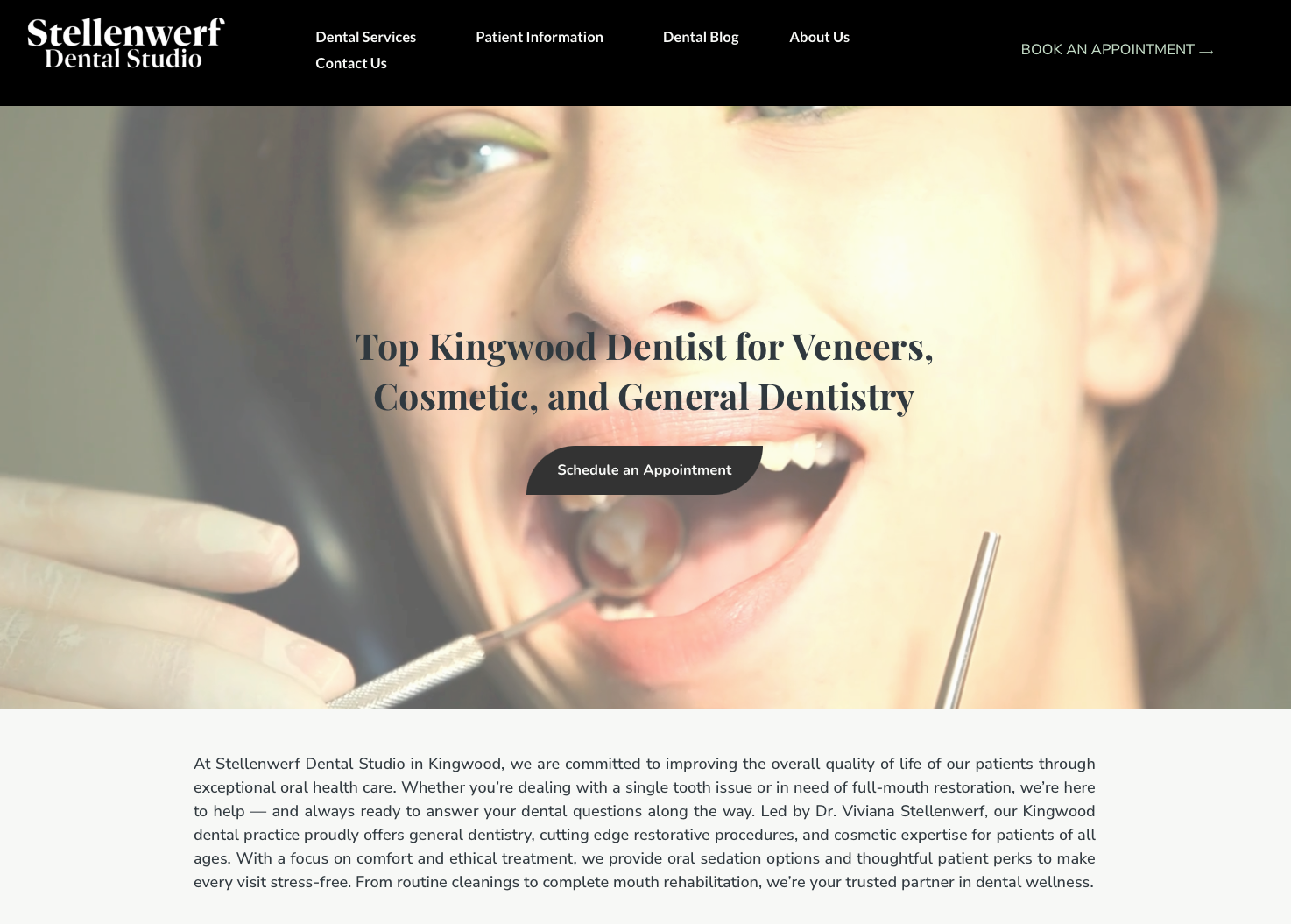
Stellenwerf Dental Studio

Reliant Dentist

Meyerland Family Dentistry
THE PROCESS
What does dental SEO look like when it is built right?
Dental SEO is mostly structure. A typical practice is a general dentist, a cosmetic dentist, and often a laser or implant practice at the same time. Google wants to see that hierarchy, and so do the AI engines. So we start with an outline before anyone writes a word.
- Map the practice. General dentistry, cosmetic dentistry, implants, clear aligners, emergency care. Under each one, every procedure you perform: fillings, crowns, bridges, dentures, root canals, sealants, whitening, veneers. For most practices that is 20 to 25 pages, each one a real search a patient types.
- Write the hub page first. The general dentistry page must cover every procedure that hangs under it before those procedure pages exist. It is a table of contents, not a page that says “if your teeth hurt, call us.”
- Put the same words in the same order everywhere. Title tag, H1, headings, and the navigation menu all carry the same procedure names. The menu is the second most important signal you send. If someone read it aloud and you could not tell it was a dental office, it is failing.
- Anchor the location. “Cosmetic and General Dentist in Kingwood,” not “Welcome to Our Practice.” Neighborhood pages for the areas you pull from, each written on its own, never cloned.
- Give each page enough to say. Pages that rank for competitive dental terms today often run 2,000 words or more. We lay that text out so the page does not look heavy, with FAQs and insurance answers doing the work.
- Interlink and measure. Procedure pages link to each other and to the hub. Then we read Google Search Console and the grid every month.
The structure is what makes the AI engines pick you too. A page that is clearly about dental implants can be lifted as source material. A page that is 4 paragraphs about how friendly the staff is cannot.
THE WARNINGS
What dental marketing mistakes cost practices the most?
We see the same problems on almost every dental site, and 99 percent of websites get some of this wrong. In a field as competitive as dentistry you have to do far more right than you can afford to do wrong.
- Pasting AI copy onto the site. Asking ChatGPT what a dental website should include is a fine way to check your outline. Pasting what it writes is not. It is a mashup of your competitors’ sites, and Google can tell.
- Letting one topic wander into another. A veneers page should not drift into full mouth restoration. One page, one intent.
- A “Services” menu. It should say Dental Services and break out general, cosmetic and implant dentistry as their own items.
- Slow follow-up. If nobody calls a form fill back within minutes, the patient has booked down the street. The lead counted. The patient did not.
- The front desk. Some practices have a marketing problem that is really a phone problem. If the person answering is abrasive, younger patients hang up and move on. Fixing the page will not fix the phone.
- The wrong platform. Wix, Squarespace and template sites talk about SEO but do not give you the controls to do it. Dentistry is too competitive for that. WordPress does.
Most of these are fixable without a rebuild. If your site looks fine but does not produce, our guide to common website problems walks through what we check and why.
COST AND ROI
How much does dental marketing cost in Houston?
It depends on what kind of dentist you want to be. A general dentist serving a few neighborhoods competes in a smaller circle. With a properly built site, local SEO for a general dentist is a modest monthly program, and most of the work is in the map pack, reviews and the procedure pages.
Cosmetic dentistry is a different animal. You compete for high-value cases against practices that spend heavily, and a serious cosmetic program is several times the size of a general dentistry program. Implant terms behave the same way. The tell is the cost per click: a keyword that costs a lot to advertise on is hard to rank on, and worth ranking on.
For a local dental practice, 2 or 3 good pages or posts a month is a healthy cadence, each about a procedure or a question a patient actually has.
On the paid side, we manage more than $1 million a year in Google Ads, so we know what a new patient lead costs before you spend a dollar. Sometimes PPC management should carry a new practice while the SEO builds. Sometimes the budget is better spent fixing the site first. We will tell you which, and we track the result as booked appointments, not form fills.
WHY VERTICAL WEB
Why should a dental practice choose Vertical Web?
Here is the honest case for us.
- Hire the people other marketers learn from. Beth Guide has taught SEO since 2003 for the SBA, the University of Houston SBDC, Lone Star College and HCC, and appears on Fox 26 as a technology expert. The dental structure on this page is what she teaches, and what we build.
- One accountable in-house team. Hosting, design, development, content, SEO and paid search are all under one roof. When something breaks, no vendor points at another vendor. You call one number.
- Staying power. We have been in business since 1998, and the original 1998 client is still with us. We are a Certified Google Partner with a 4.9 Google rating and First Place triple honors in Best of West Houston 2025.
- Candor. We will talk you out of the wrong purchase. If your front desk is losing the patients your site produces, we will say so. If a cosmetic program is more than your budget supports, we will say that too.
When should you start? Before you need the patients. Local SEO builds over months, and the practice that started last spring holds the map spot this fall. If the schedule has softened, every month of waiting is a month the practice down the street collects reviews you could have had. Start with facts: our free website analysis shows where your practice ranks across its service area, what your profile and reviews tell Google, and which procedure pages are missing.
If you are part of a larger group, our medical practice marketing page covers that side. And if you would rather learn the method first, our free monthly Internet Marketing Clinic is where we teach it.
Questions
Dental marketing: common questions
Dental SEO is the part of dental marketing that earns you a spot in Google and AI engine results without paying per click. Dental marketing is the whole picture, from SEO and your Google Business Profile to reviews, paid ads, content and the booking experience.
For most practices, not far. Patients search within a small radius, usually about 5 miles, unless they already know a specific dentist. That is why we measure rankings on a grid across your service area, and why neighborhood pages matter more than citywide terms.
Yes, for every procedure you want patients to find you for. A page about dental implants ranks for dental implants. A services page that lists 20 procedures in a paragraph ranks for none of them. Each procedure gets its own page with enough depth to answer a patient’s questions.
Google reads the words in your reviews to understand what your practice does. A review that says the staff was nice does not help much; one that mentions a cleaning, a crown or an implant does. We help practices ask for reviews in a way that invites patients to describe their treatment, slowly and honestly.
We recommend against it for a competitive field like dentistry. Those platforms talk about SEO but do not give you the controls to compete, and by the time you find out, you may be a long way into the investment. We build dental sites on WordPress.
Yes. Request a free website analysis and we will show you where your practice appears across its service area and which procedure pages are missing.
Keep reading
Marketing for other industries, and the related services
Your Next Patient Is Searching Right Now
Find out where your practice shows up, where it does not, and exactly what it would take to fix. The audit is free and the answers are straight.
Galleria 713-703-3030 | Kingwood 281-852-8253 | info@verticalweb.com
No related posts.