WEB DESIGN FOR SOFTWARE AND TECHNOLOGY COMPANIES
SaaS Website Design and Development
Marketing websites for SaaS, software and technology companies that explain the product in one sentence, show it working, prove it with customers and move buyers to a trial, a demo or a conversation with sales.
Galleria 713-703-3030 | Kingwood 281-852-8253
THE WEBSITE SELLS THE PRODUCT
How do software buyers evaluate a SaaS website?
Software buyers do most of their research alone. They compare features, check pricing, look for integrations and security details and read customer stories long before they request a demo. If your site does not answer those questions, a competitor’s site will.
The hardest part of SaaS website design is clarity. Technical products are easy to over explain and just as easy to under explain. The best software sites say what the product does in one sentence, show it working, prove it and make the next step obvious.
We design SaaS marketing sites around that buying journey, built on WordPress so your marketing team ships pages without waiting on engineering. When the project needs custom code, our web development team handles it in-house.
WHAT BUYERS NEED
What software buyers need before they convert
A one sentence answer
What the product does, for whom and why it is better, above the fold, in plain words.
Proof it works
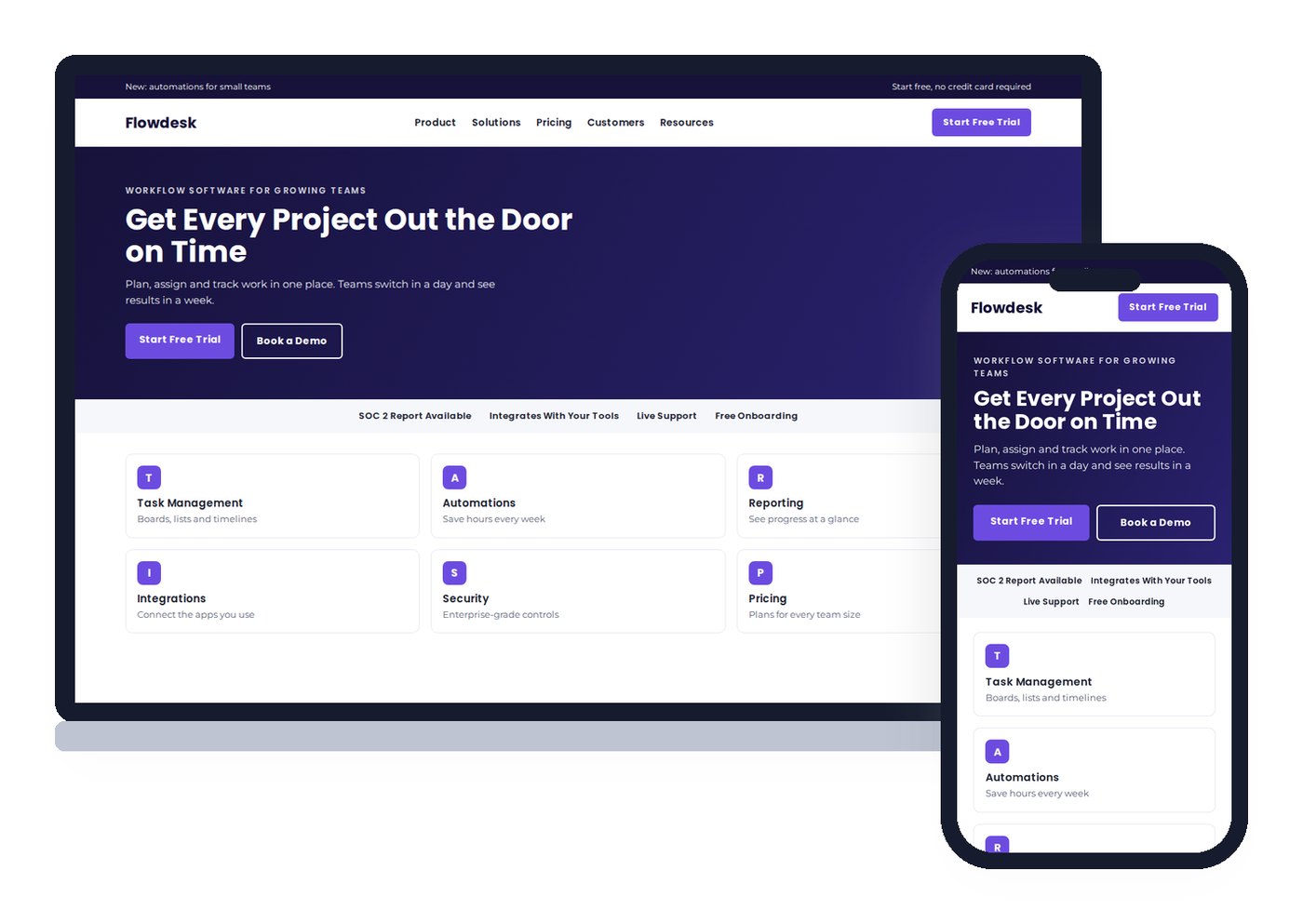
Real screenshots, short product videos or an interactive tour, not abstract illustrations.
Integrations
The tools it connects to, with a page for each major integration and how setup works.
Clear pricing
Plans, limits and what changes the price, so buyers can qualify themselves before they call.
Security and compliance
How data is stored and protected, plus the certifications and policies you actually hold.
An obvious next step
Start a Trial, Book a Demo or Talk to Sales, used consistently and tracked on every page.
ARCHITECTURE
Should your SaaS marketing site be separate from the app?
In most cases, yes. The application belongs to engineering and changes with every release. The marketing site belongs to marketing and needs new pages every week: a campaign, a comparison, a feature launch, a webinar. When both live in the same codebase, every marketing change waits in the engineering queue.
The setup we recommend is simple. The marketing site runs on WordPress at your main domain. The app runs at a subdomain such as app.yourdomain.com. Login and signup buttons connect the two, and analytics track the visitor across both so you can see which pages produce trials.
Beth Guide has a strong view on platforms that applies here. Proprietary site builders put your business in somebody else’s hands, and you have no control over what they do. She has watched large platforms change the rules on users more than once, including Google shutting down the free websites it once encouraged businesses to build inside their Business Profiles. Your marketing site is a core asset. Own it.
That is why we build on WordPress: open source, portable and supported by mature SEO tools. Read more in our guide to custom WordPress development.
PAGES THAT RANK
What pages help a SaaS company rank in search?
Most SaaS sites rank for their own name and little else. Buyers who do not know you yet search for the problem, the job they need done or an alternative to a tool they already dislike. A site that grows organically publishes for each of those:
- Use case pages for each job the product does, written around the outcome, such as automating invoice approvals.
- Industry pages for the verticals you serve best, with the language and examples those buyers use.
- Integration pages for each major tool, which capture searches like “your category plus Salesforce.”
- Comparison and alternatives pages that compare you honestly with the tools buyers are weighing.
- Guides and documentation that answer setup and how-to questions, which also lowers support load.
- Changelog and release notes that show the product is alive and improving.
Content quality decides whether those pages work. Beth’s test for any article, especially one written with AI help, is simple: what have you added to the conversation? Pages that repeat what everyone else says do not rank, and AI engines have no reason to cite them. Pages built from your team’s real expertise, data and customer stories do. Our content marketing team writes that way, and our AI SEO services make sure AI assistants can find and cite you.
THE CASE FOR VERTICAL WEB ON SAAS WEBSITES
A web team that also runs servers
We teach this
Beth Guide has taught SEO since 2003, for the SBA, the University of Houston SBDC, Lone Star College and HCC. Your team learns the why, not just the what.
Design, development and hosting in-house
One team since 1998 designs the site, writes the code and runs the servers. No hand-offs between agencies.
Candor on scope
If a focused 10 page site will sell better than a 60 page one, we will tell you.
CONVERSION
How do SaaS websites turn visitors into trials and demos?
Traffic only matters if it turns into trials, demos and pipeline. These are the conversion details we design into every software site:
- Short signup and demo forms. Ask for what sales really needs. Every extra field costs signups.
- Two paths for two buyers. A self serve trial for hands on users and a demo request for teams that need a conversation.
- Proof near every ask. Logos you have permission to use, short quotes and specific outcomes next to the buttons.
- Focused landing pages. Paid and email campaigns land on pages built for one offer, not the home page. See our landing page design service.
- Tracking that sales trusts. Form fills, trials and demos tracked from first visit to signup, with clean data passed to your CRM. Our ROI tracking setup connects marketing spend to revenue.
Speed counts here too. A marketing site that loads slowly loses visitors before the headline appears, and Core Web Vitals affect rankings. We host on our own managed cloud hosting when traffic or launches demand it.
WHO WE DESIGN FOR
Technology websites we build
We build marketing sites for B2B SaaS platforms, vertical software for specific industries, IT service and managed service providers, technology startups preparing for launch and established software companies that have outgrown a template site.
Many of our technology clients sell into industries we also design for, such as healthcare, manufacturing and professional services. That overlap helps us write industry pages that sound like the buyer. If your product sells to firms like accountants or consultants, our professional services website design page shows how those buyers think.
Moving off an older platform is common for growing software companies. The risk is the same as any redesign: years of blog posts, docs and comparison pages that already rank can vanish if their URLs change. We inventory every existing URL before the move, keep the ones that rank, redirect the rest and watch Search Console closely for the first weeks after launch. Your documentation and help center get the same care, because those pages often bring in more organic visitors than the home page.
Choosing a platform
WordPress vs Webflow for SaaS website development: which platform fits?
Webflow is popular with SaaS startups because designers like it. You can go from a Figma file to a polished marketing site with fine control over the visual design, and the built-in CMS handles a blog and simple collections. For a small team with a designer who wants to own the site, Webflow is a reasonable option.
The trade-offs show up as the company grows. Webflow is a hosted platform, so you rent it, its pricing changes with your plan and traffic, and you cannot move the site to another host. Its CMS has limits on collections and items that a content heavy B2B SaaS site can hit. Plugins for SEO, multilingual content, gated resources and complex forms are thinner than on WordPress.
WordPress is open source and portable, with mature SEO tools and a plugin for almost any marketing need. With Elementor Pro, designers still get visual control, and marketers can ship pages without engineering. For most B2B SaaS companies that plan to publish use case, integration and comparison pages at scale, WordPress is the safer long term choice. If you are moving off Webflow or another builder, our website redesign process keeps every URL that ranks so organic traffic carries over after the new site goes live.
Best practices that convert
SaaS website design best practices for conversion: value proposition, screenshots, case studies and CTAs
The value proposition comes first. Your target audience should understand what the product does, who it is for and the main benefit within the first screen. Founders often want to explain everything at once. The best SaaS web design says one thing clearly, then lets the buyer dig deeper.
Show the product. Real screenshots and short clips build trust faster than abstract illustrations, especially when each one is labeled with the result it produces. Put proof right next to every CTA: a customer quote, a short review or a logo you have permission to use. A case study with a specific outcome does more for credibility with enterprise buyers than any feature list.
Keep one primary call to action per page and repeat it, such as Start a Trial or Book a Demo, with a secondary option for buyers who are not ready. Design for two audiences: the hands-on user who wants to try it and the decision maker who needs a business case. Test the user experience on a phone, because many first visits come from a link in an email or social post. Then measure conversion by page so the next update is based on data, not opinion. If your brand needs work before the site does, our branding services sit with the same team.
QUESTIONS
SaaS website design questions
A one sentence statement of what the product does, product screenshots or a short demo, features organized by the problems they solve, integrations, a clear pricing page, security and compliance details, customer stories, documentation or a help center and an obvious next step, whether that is a free trial, a demo request or talking to sales.
Usually, yes. The app belongs to engineering and changes with every release. The marketing site belongs to marketing and needs to change weekly. Running the marketing site on WordPress at the main domain, with the app on a subdomain such as app.yourdomain.com, lets each team move without waiting on the other.
Speed and ownership. Your marketing team can publish landing pages, comparison pages and blog posts without a developer, SEO tools are mature and you own the code and content outright. Custom frameworks make sense for the product, not for the pages that sell it.
By publishing pages for the problems buyers search, not just the product name. That includes use case pages, industry pages, integration pages, comparison and alternatives pages and helpful guides that show real expertise. Pages that add something new to the conversation rank and get cited by AI engines. Generic summaries do not.
In most cases, yes. Buyers expect it, and hiding pricing sends many of them to a competitor that shows it. If your pricing truly depends on scope, show starting points or plan structure and explain what changes the price.
A focused marketing site often takes 8 to 12 weeks. Larger sites with documentation, integrations directories and multiple product lines take longer. Having product screenshots, positioning and customer stories ready early keeps the schedule tight.
Yes. Our branding and logo design team works alongside the web designers, so the brand, the product screenshots and the marketing site look and sound like one company.
Yes. We can start from a blank page with your product, your audience and your goals, or redesign an existing site while keeping the pages that already rank.
Webflow suits small teams with a designer who wants visual control. WordPress is usually better for B2B SaaS companies that plan to publish many pages, need strong SEO tools and want to own and move their site.
Show real screens of the product doing a specific job, label each one with the result it produces, keep them current with each release and place them next to the call to action they support.
AI is changing how software works, but buyers still compare products, read case studies and check pricing and security before they sign. A clear marketing site that AI engines can read and cite matters more, not less.
Is your website explaining your product clearly?
Request a free website audit. We will review your messaging, pages, speed and conversion paths, then tell you plainly what would move more visitors to a trial or demo.
Galleria 713-703-3030 | Kingwood 281-852-8253 | info@verticalweb.com
No related posts.